Why One Page Gets Cited by AI and Its Near Identical Twin Gets Ignored
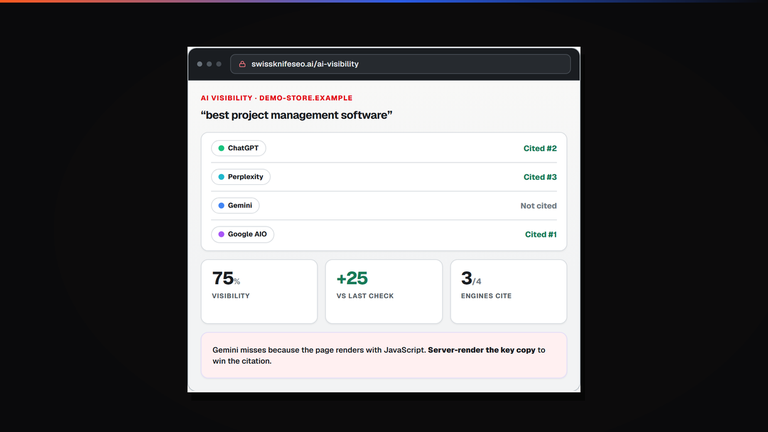
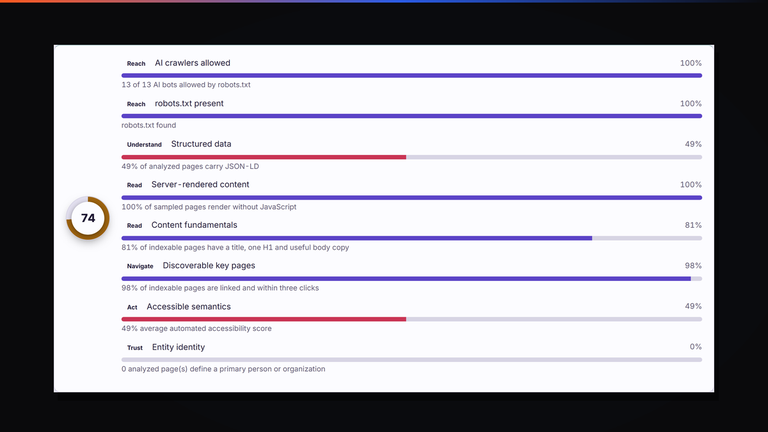
Two pages, same template, same quality, and only one of them ever gets named as a source. The eight weighted signals behind an AI readiness score...
Read the guide ›
Creating copies of Word documents serves numerous practical purposes in personal and professional contexts. Preserving the original file ensures you always have a pristine reference version if you need to return to it. Making a copy lets you create variations without risking changes to source material. When collaborating with others, sharing a copy instead of the original protects your work from unintended modifications. Version control becomes easier when you maintain multiple numbered copies showing document evolution. Designers and writers often create templates from existing documents, making copies the efficient starting point. Understanding the various methods for copying Word documents across different devices and storage locations is essential for productivity.
The simplest method for creating a Word document copy on Windows involves using File Explorer. Navigate to the folder containing your .docx file you want to copy. Right-click the file and select "Copy" from the context menu. Then right-click in an empty area of the same folder and select "Paste." Windows automatically creates a duplicate file with "Copy of" prepended to the original filename.
If your original file was named "Project Budget.docx," the copied version becomes "Copy of Project Budget.docx." This automatic naming prevents filename conflicts. You can immediately rename the copy to something more meaningful by right-clicking it and selecting "Rename." This method works for any file type, not just Word documents.
For faster copying, you can select a file and use the keyboard shortcut Ctrl+C to copy, then Ctrl+V to paste. This method is quicker than using the context menu for frequent copying tasks. You can also select multiple files simultaneously using Ctrl+Click and copy them all at once.
Opening a Word document and using the File menu's "Save As" function creates a copy with a new filename. This method is preferred when you want to work in the new document immediately after copying. Open your Word document, click the "File" menu, and select "Save As." A dialog box appears asking for the new filename and location.
The "Save As" dialog presents your file system, allowing you to choose where to save the copy. You might save the copy in the same folder as the original, creating a numbered or dated version, or save it in a different folder entirely. After entering a new filename and clicking "Save," Word closes the original document and opens the new copy for editing.
This method works identically on both Windows and Mac versions of Microsoft Word. The "Save As" function ensures the original file remains untouched while creating a new version. It's particularly useful when you want to begin editing the copy immediately without maintaining two open windows.
Newer versions of Microsoft Word for Windows and Mac include a "Save a Copy" feature distinct from "Save As." This function creates a copy while keeping the original document open in your current window. Open your document, click "File," and look for "Save a Copy" as a separate menu option.
The "Save a Copy" dialog allows you to choose a filename and location for the copy, similar to "Save As." The key difference is that after saving the copy, Word returns you to the original document rather than switching to the new copy. This approach is useful when you want to preserve your current working document while creating a backup or variant.
The availability of "Save a Copy" varies by Word version and subscription type. If you don't see this option, your version may not include it, and "Save As" remains the standard copying method.
Mac users can duplicate Word documents using Finder without opening them. Navigate to the folder containing your .docx file in Finder. Right-click the file and select "Duplicate" from the context menu. Finder immediately creates a copy with "copy" appended to the filename.
If your original file was "Marketing Strategy.docx," the duplicate becomes "Marketing Strategy copy.docx." You can rename the copy by clicking its name and typing a new filename. The keyboard shortcut Command+D also duplicates selected files in Finder without using the context menu.
This method is faster than opening Word because it doesn't require launching the application. It's ideal for creating multiple copies or duplicating documents you don't plan to edit immediately.
Mac users can also create copies directly from within Word. Open your document, click the "File" menu, and select "Save As." The Mac version of this dialog includes a "File Format" option and a "Where" dropdown showing your file system. Enter a new filename and select a location, then click "Save."
Similar to Windows, "Save As" switches your active document to the newly saved copy. If your Mac version includes "Save a Copy," it provides the alternative of creating a copy while remaining in the original document.
If your Word documents are stored in OneDrive, Microsoft's cloud storage service, you can duplicate them directly through OneDrive's web interface or desktop app. Open OneDrive in your web browser, locate the Word document, right-click it, and look for a "Copy" or "Duplicate" option.
OneDrive's web interface may require you to use the three-dot menu button instead of right-clicking. The exact process varies depending on your OneDrive version and browser. After selecting copy or duplicate, OneDrive prompts you for a new filename and creates the copy in the same folder or a location you specify.
The OneDrive desktop app for Windows and Mac also allows right-click duplication. This method is convenient if you regularly work with cloud-stored documents, as it eliminates the need to download, copy locally, and re-upload files.
Organizations using SharePoint for document management can copy Word documents directly within SharePoint. Navigate to the document library containing your file, select the Word document, and look for a copy option in the toolbar or context menu. The exact steps vary by SharePoint version and organizational customization.
Some SharePoint instances provide a "Copy to" feature that allows copying documents to different libraries or sites. Others use a standard copy-paste approach similar to file explorers. Consult your organization's SharePoint documentation or IT support for specific instructions.
Copying documents in SharePoint maintains version history and permissions settings, making it the preferred method for managed document repositories. Users without SharePoint expertise should ask their IT departments for assistance with document copying procedures.
You might want to create a copy of a Word document in a different folder than the original. Using File Explorer or Finder, you can copy a file from one location and paste it into another. Right-click the source document, select "Copy," navigate to the destination folder, and paste the file there.
This method creates an exact duplicate with the same filename in the new location. If you paste the file into the same folder, Windows and Mac automatically rename it to avoid conflicts. If you paste into a different folder, the filename remains unchanged, allowing identical filenames in separate directories.
Using "Save As" provides similar functionality with the added benefit of choosing a new filename during the copy process. This approach combines copying and renaming into a single operation, reducing steps for organized document management.
If your Word document is stored in Google Drive, you can copy it while maintaining the .docx format or converting it to a Google Docs file. Right-click the Word document in Google Drive and select "Make a copy." Google Drive creates a copy in your Drive with "Copy of" prepended to the filename.
The copied file remains in .docx format, ready to open with Microsoft Word. Alternatively, you might want to convert the Word document to Google Docs for collaborative editing. Right-click the file and select "Open with" then choose "Google Docs." This creates a new Google Docs version while keeping the original Word document unchanged.
Google Docs offers cloud-based collaboration features that Word documents don't provide natively. Converting a copy to Google Docs is useful for team projects requiring simultaneous editing from multiple users. You can later download the Google Docs version as a .docx file if needed.
iOS devices running Apple's Files app allow copying Word documents. Open the Files app, navigate to your document, tap and hold it, and select "Duplicate" from the menu. iOS creates a copy with a modified filename, usually adding a number like "Document 2.docx."
Microsoft Word's app for iPhone and iPad provides limited file management features. If your documents are in OneDrive or SharePoint, copying them within the Word app accesses these cloud services' copy functionality. For local device storage, the Files app provides the most straightforward duplication method.
The Files app on iPhone integrates with iCloud Drive and other cloud services, allowing you to manage documents across your entire Apple ecosystem. Creating copies on iOS prepares documents for editing on the go while maintaining backups of original versions.
Android users can copy Word documents using the Files by Google app or the device's native file manager. Open the Files app, locate your .docx file, tap and hold it, and select "Copy" from the menu. Then navigate to the destination folder and paste the file.
The exact menu options vary depending on your Android device and file manager app. Some devices use a "Duplicate" option, while others require separate copy and paste steps. Tapping and holding the file usually opens a context menu with available actions.
Microsoft Word's Android app provides access to documents stored in OneDrive or SharePoint. Like iPhone users, Android users benefit from cloud storage when managing Word documents, as it enables seamless file sharing and backup across devices.
When you create a reusable template from an existing Word document, you're essentially making a specialized copy. Open your template document, remove or modify content that's specific to one use case, and keep structure elements like headers, footers, styles, and formatting. Save this as a new document using "Save As."
You can also save Word documents in the .dotx template format. Open your document, click "File," select "Save As," and change the file type from "Word Document" to "Word Template." This prevents accidental modifications to your template and makes it easily accessible when creating new documents from the template.
Creating multiple copies of template documents before distributing them ensures team members always have the most current version. Updates to the master template don't affect previously distributed copies, preventing confusion about which version is current.
Creating a copy you don't want others to modify requires making it read-only. After creating a copy using any method above, right-click the file in File Explorer or Finder, select "Properties" (Windows) or "Get Info" (Mac), and enable the read-only or locked attribute. This prevents accidental or intentional modifications to the copy.
Read-only files can still be opened and read normally. Users attempting to save changes receive an error message and are prompted to "Save As" with a new filename. This protection prevents overwriting the protected copy while allowing continued access for reviewing.
For shared documents, protecting copies maintains document integrity across teams. Setting up read-only copies of important documents prevents accidental changes that could cause problems later.
When you have two versions of a Word document, Word's "Compare" feature highlights differences between them. Open one version of your document, click the "Review" tab, and select "Compare." Choose the other document version to compare against. Word opens a new document showing all differences between versions with tracked changes.
This feature is valuable when you've created multiple copies and edited them separately, then need to merge changes. Understanding differences between versions prevents duplicating work or losing important updates. The Compare feature works best when you're comparing two closely related versions of the same document.
Establish a clear naming convention for your document copies. Using dates or version numbers makes it easy to identify which version is most current. "BudgetQ2_v1.docx," "BudgetQ2_v2.docx," and "BudgetQ2_Final.docx" are clearer than multiple "Copy of" files.
Organize copies in dedicated folders or use cloud storage with version history capabilities. OneDrive, Google Drive, and SharePoint maintain automatic version history, eliminating the need to manually create numbered copies. This approach prevents folder clutter while preserving access to all previous versions.
Regularly delete obsolete copies to prevent storage waste. Before deleting, verify that you have preserved any important changes in more recent versions. Cloud storage services like OneDrive provide trash folder recovery options if you delete something accidentally.
Whether you're creating backups, developing variations, or establishing templates, the ability to copy Word documents efficiently is essential for document management. From simple File Explorer duplication to cloud-based copy operations, multiple methods exist for different scenarios. Windows users benefit from File Explorer's straightforward copy-paste approach, Mac users from Finder's duplicate function, and cloud-focused users from OneDrive or Google Drive's built-in features. Understanding these various methods allows you to choose the most efficient approach for each situation. Regular document copying combined with clear naming conventions and organized storage prevents loss of important work and streamlines collaboration. Whether working independently or in teams, these copying techniques form the foundation of reliable document management practices.
Run a free scan in Swiss Knife SEO, the platform we built and use on every client engagement. No account needed for the first audit.
Two pages, same template, same quality, and only one of them ever gets named as a source. The eight weighted signals behind an AI readiness score...
Read the guide ›A walk through the first scan on swissknifeseo.ai: what the crawler reports, how issues get ranked by cost rather than count, and where the AI citation...
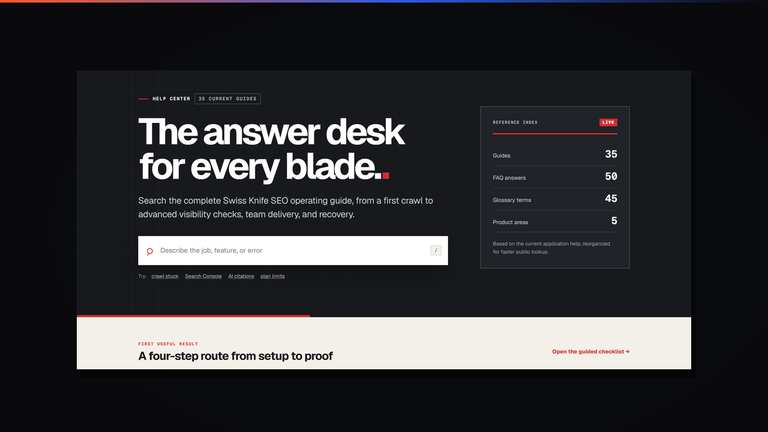
Read the guide ›The help center is a public reference, not a ticket queue. It carries 35 guides, 50 FAQ answers and 45 glossary terms, and you can read...
Read the guide ›